Wood shed removal planned around framing, rot, and tight access
Wood sheds can hide soft floors, exposed fasteners, roof layers, wiring, and heavy built-in shelving. We identify those conditions before the first section comes apart.
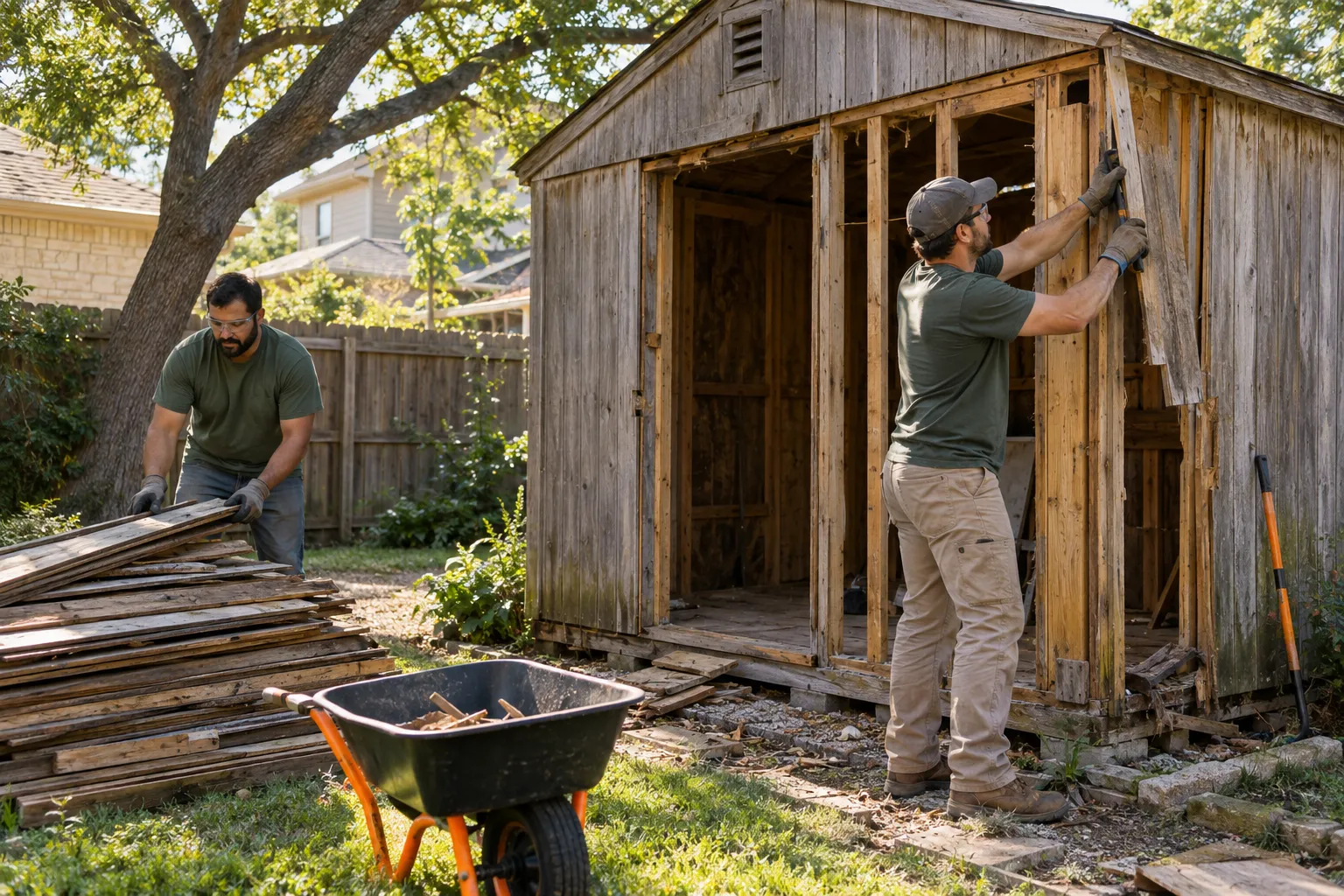
What the working scope can include
- Wood siding, sheathing, and framing
- Shingle or lightweight panel roofing
- Doors, windows, shelving, and floor sections
- Nails, screws, and job-related wood debris
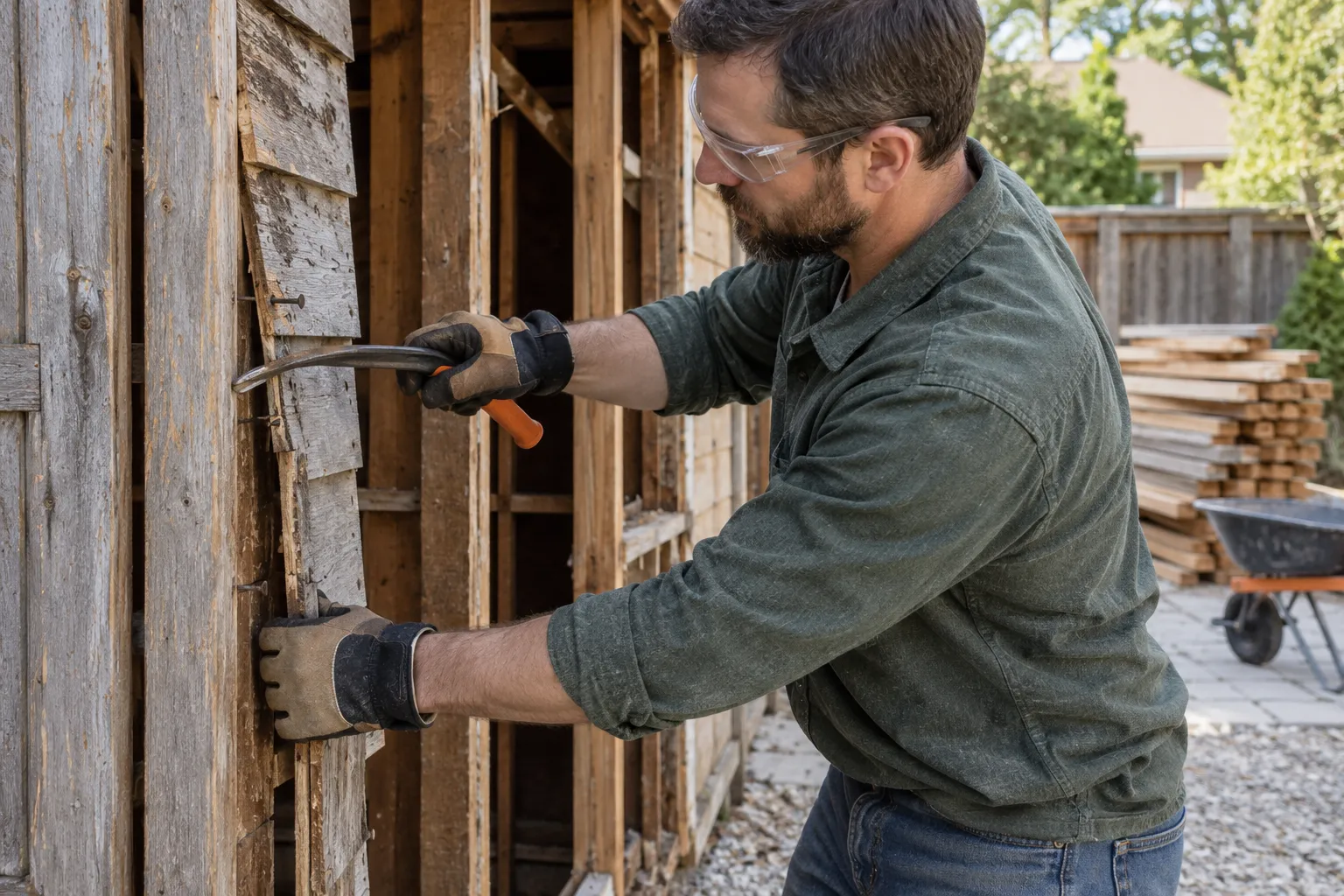
The estimate follows the conditions
- Shed size and framing style
- Roof layers and wall material
- Floor condition and joist access
- Rot, leaning, or storm damage
- Distance from the shed to the truck
Photos and measurements help begin the review. Final scope depends on the conditions confirmed for the property.
Prepare the site without starting the demolition
Remove items you want to keep and separate chemicals, fuel, batteries, and unknown containers.
Have electrical, gas, plumbing, or other connected services handled by the appropriate qualified provider.
Clear the work area, gate, side yard, driveway, and truck approach. Keep pets and children away.
Wood Shed Removal questions
Confirm these points before accepting a final scope.
Can a badly rotted shed still be removed?
Yes, but unstable walls and floors need a controlled plan. Keep people out and send photos of leaning, collapse, or missing roof sections.
Should I pull off loose boards first?
Leave the structure in place unless a loose piece creates an immediate hazard. Exposed nails and weakened framing make unplanned handling risky.
Are shingles included?
Roofing should be identified in the estimate. Material type and the number of layers affect weight, sorting, and disposal.
Explore nearby service-area pages
Start with the structure, access, and finish line.
Have photos, rough dimensions, utility notes, and the narrowest route measurement ready.