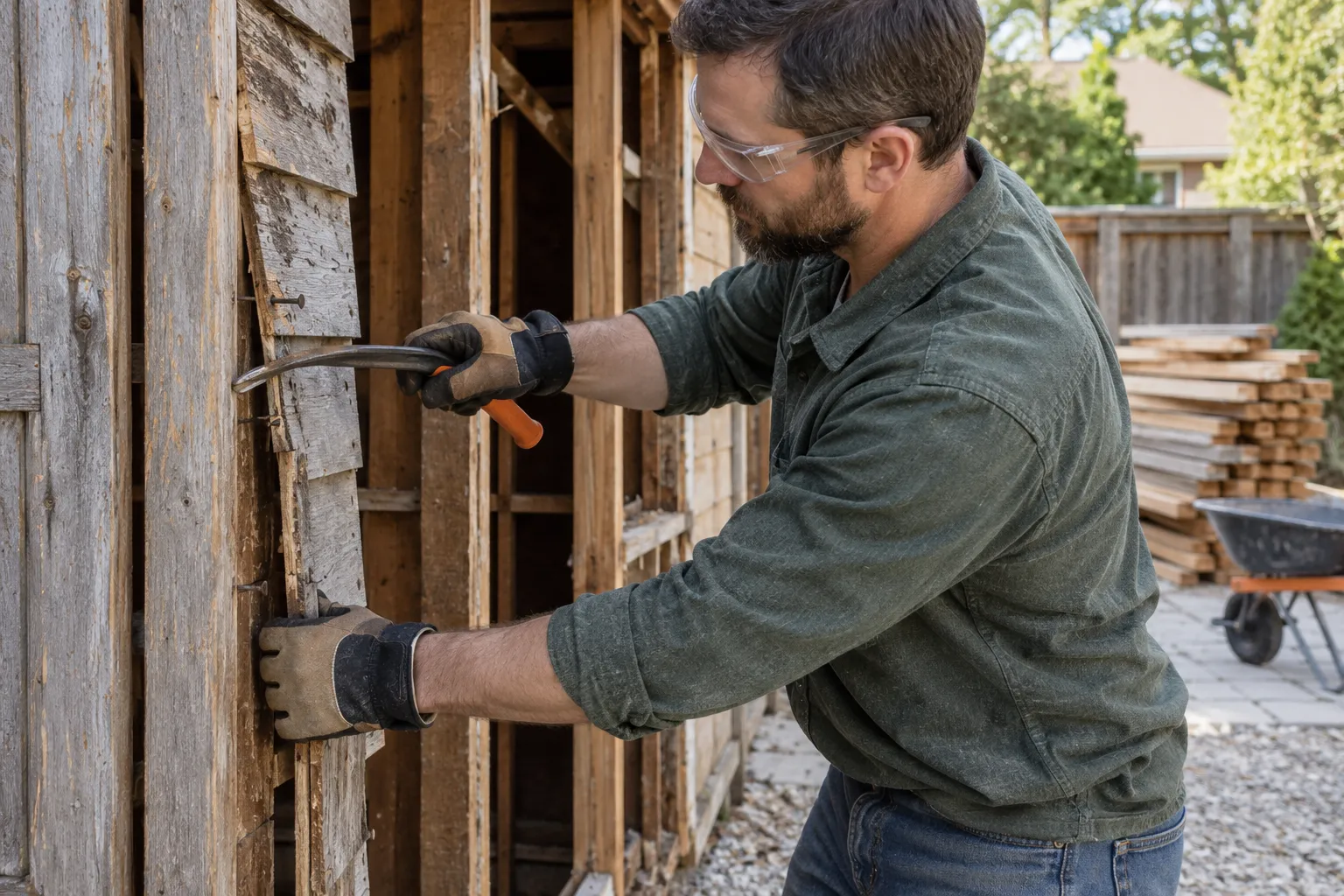
A few clear photos can reveal the parts of a wood shed that change the work: layered roofing, soft floors, built-in shelves, exposed wiring, and a narrow route to the truck.
Photograph every side
Take one wide photo from each accessible side. Include the roof edge, door opening, wall lean, missing boards, and any place the shed touches a fence or another structure.
Look at the roof and floor
Note shingle layers, metal roofing, holes, sagging rafters, soft floor sections, and visible joists. Do not climb onto an old shed to inspect it.
Find connections and contents
Show wiring, plumbing, shelving, benches, cabinets, and everything still stored inside. Separate chemicals, fuel, batteries, and unknown containers.
Measure the route out
Record the narrowest gate, sharp turns, steps, eaves, meters, landscaping, and the distance from the shed to a truck position.
Use the checklist
- Four exterior views
- Roof and floor condition noted
- Utilities identified
- Contents photographed
- Gate and route measured
What to send with an estimate request
Include one wide photo, close photos of connections and damage, rough dimensions, the narrowest access measurement, utility status, and a note about concrete or anchors. Keep hazardous materials out of ordinary debris.