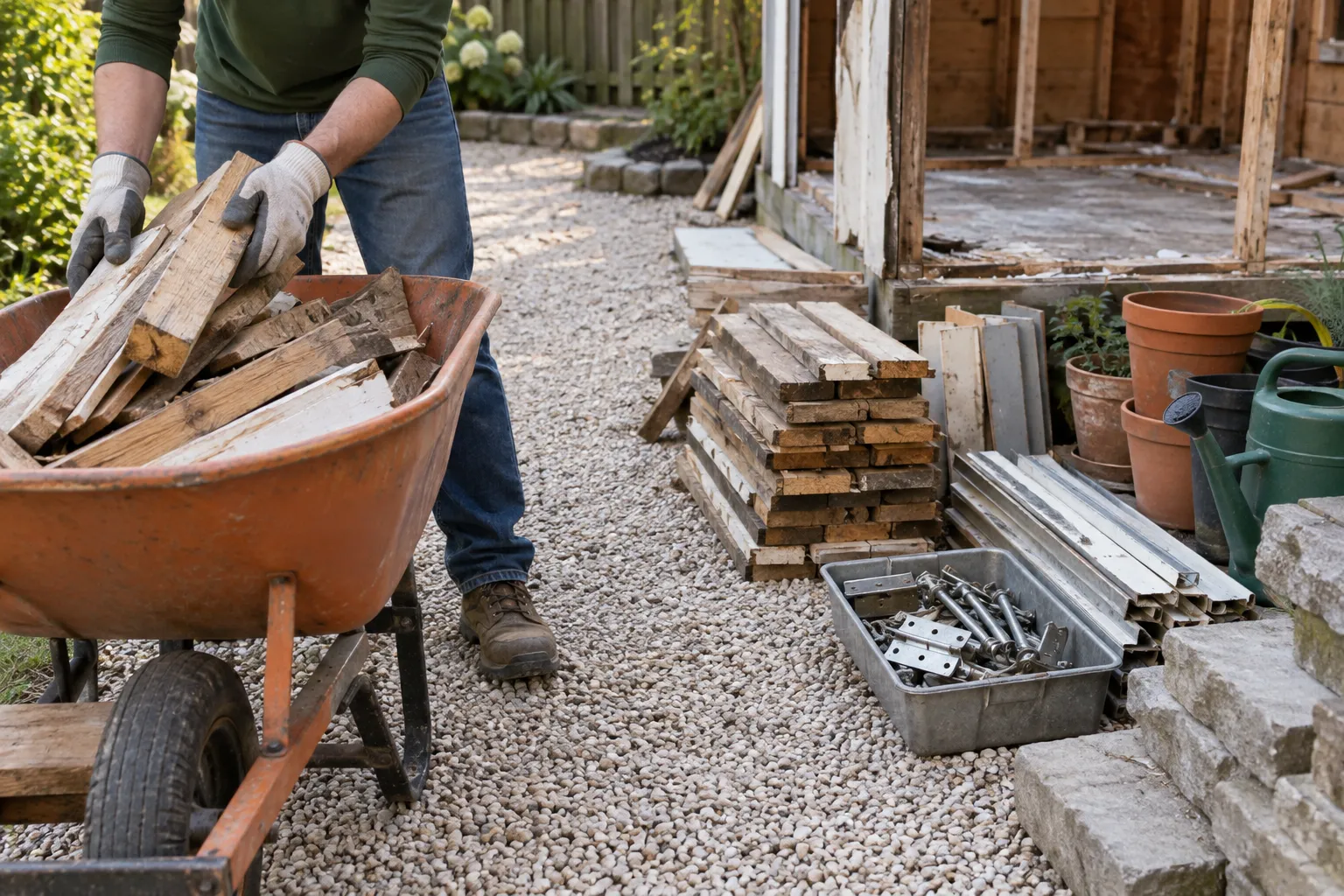
A shed cleanout sets the boundaries for demolition day. The useful first pass is to decide what stays, what can join the ordinary load, and what needs an approved disposal route.
Pull out what you want to keep
Remove documents, keys, hand tools, family items, and anything with personal or resale value. Mark bulky keepers that cannot be moved before the appointment.
Separate regulated materials
Set aside fuel, paint, pesticides, batteries, propane, pool chemicals, and unknown liquids. Do not hide them in bins or mix them with demolition debris.
Show built-ins and heavy items
Photograph shelves, benches, cabinets, safes, machinery, and material attached to the shed. These items can change the work order and load.
Clear the path
Move hoses, toys, planters, and vehicles from the shed, gate, driveway, and truck approach. Keep children and pets out of the work area.
Use the checklist
- Keepers removed or marked
- Chemicals and fuel separated
- Heavy items photographed
- Loose contents shown
- Gate and loading path cleared
What to send with an estimate request
Include one wide photo, close photos of connections and damage, rough dimensions, the narrowest access measurement, utility status, and a note about concrete or anchors. Keep hazardous materials out of ordinary debris.